




• Форум работает в архивном режиме www.old.nado.in

Collection Download Ebooks Best Seller Updated Daily

  • Автор темы Автор темы booksz
  • Дата начала Дата начала
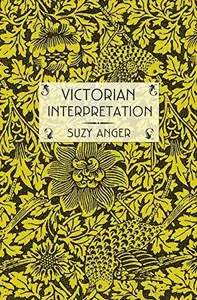
Victorian Interpretation
18f1356906cd3d444916259263a28143.webp

Victorian Interpretation By Suzy Anger
2011 | 222 Pages | ISBN: 080146479X | PDF | 1 MB
Suzy Anger investigates the relationship of Victorian interpretation to the ways in which literary criticism is practiced today. Her primary focus is literary interpretation, but she also considers fields such as legal theory, psychology, history, and the natural sciences in order to establish the pervasiveness of hermeneutic thought in Victorian culture. Anger's book demonstrates that much current thought on interpretation has its antecedents in the Victorians, who were already deeply engaged with the problems of interpretation that concern literary theorists today.Anger traces the development and transformation of interpretive theory from a religious to a secular (and particularly literary) context. She argues that even as hermeneutic theory was secularized in literary interpretation it carried in its practice some of the religious implications with which the tradition began. She further maintains that, for the Victorians, theories of interpretation are often connected to ethical principles and suggests that all theories of interpretation may ultimately be grounded in ethical theories.Beginning with an examination of Victorian biblical exegesis, in the work of figures such as Benjamin Jowett, John Henry Newman, and Matthew Arnold, the book moves to studies of Thomas Carlyle, George Eliot, and Oscar Wilde. Emphasizing the extent to which these important writers are preoccupied with hermeneutics, Anger also shows that consideration of their thought brings to light questions and qualifications of some of the assumptions of contemporary criticism.


Код:
[b]AusFile[/b]
https://ausfile.com/2s2kcrvq16mm/g9iu7.7z.html
Rapidgator
https://rg.to/file/cd0b0987eae17a6f7f7c4dd142ae7fb9/g9iu7.7z.html
TakeFile
https://takefile.link/yyhcbh44vgqd/g9iu7.7z.html
[b]Fileaxa[/b]
https://fileaxa.com/drycugdothnb/g9iu7.7z
Fikper
https://fikper.com/YX0RBGcy7k/g9iu7.7z.html
Links are Interchangeable - Single Extraction
 
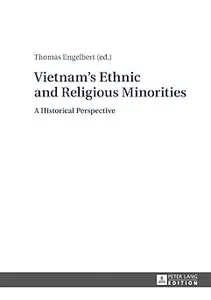
Vietnam's Ethnic and Religious Minorities A Historical Perspective

a1863d23d3b8b40c42f42af11acfaa9c.webp

Jörg Thomas Engelbert, "Vietnam's Ethnic and Religious Minorities:: A Historical Perspective"
English | ISBN: 3631660421 | 2016 | 230 pages | PDF | 975 KB
The book deals with Vietnam's ethnic and religious minorities in a historical perspective. The time frame stretches from the pre-colonial era to contemporary times. Except for one paper on the situation of the Vietnam-China border area, the authors focus on South or Southern Central Vietnam. The Chinese, the Cham and the Bahnar represent three different categories of ethnic minorities: the so-called Foreign Asians, the highly developed nationalities and the former tribal populations, who once lived at the margins. The Vietnamese and Highland Catholics as well as the French Protestants are two prominent religious minorities. The aim of this book is to contribute to a discussion about common features, categories and tasks, which transcend regional, ethnic or religious particularities and the familiar lowland-highland divide.


Код:
[b]AusFile[/b]
https://ausfile.com/uce3xgc5e9vr/z4kat.7z.html
Rapidgator
https://rg.to/file/ee85b4bbe6d2321403d162e621978d3a/z4kat.7z.html
TakeFile
https://takefile.link/ima7wn8knjhg/z4kat.7z.html
[b]Fileaxa[/b]
https://fileaxa.com/v8ysp1cmsnt3/z4kat.7z
Fikper
https://fikper.com/mHaLkyU51c/z4kat.7z.html
Links are Interchangeable - Single Extraction
 
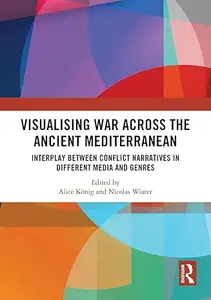
Visualising War across the Ancient Mediterranean

9d2e47ea3ca1adb8e20acbf018b368ee.webp

Visualising War across the Ancient Mediterranean: Interplay between Conflict Narratives in different Media and Genres
by Alice König, Nicolas Wiater
English | 2025 | ISBN: 1032977981 | 341 Pages | True PDF | 4.6 MB

This volume offers novel readings of ancient conflict narratives from around the ancient Mediterranean and explores their impact on later habits of understanding and representing war, with an innovative methodological focus on narrative interplay and visualisation.
The chapters provide an in-depth analysis of the ways in which interactions between a wide array of conflict narratives - including written texts, art, sculpture and drawings - result in culturally specific ways of visualising war, especially battle. The volume covers a large range of genres from a variety of ancient cultures, including Greek, Roman, Persian, Jewish and Christian, and its innovative focus on interplay offers fresh insights into how modes of visualising war compare across time and space, as well as across different kinds of text. Covering material from the third millennium bce to the present, it also sheds new light on how different ways of visualising conflict have evolved over the centuries and continue to inform habits of visualising war today. A detailed methodological introduction lays the foundation for future studies of conflict narratives, and the volume's envoi sets the agenda for new research on visualising peace.
Visualising War across the Ancient Mediterranean appeals to students and scholars working across a range of disciplines, including Classics and ancient Mediterranean studies, war studies, narratology and intertextuality studies.


Код:
[b]AusFile[/b]
https://ausfile.com/qjfyr2125awn/oo5jn.7z.html
Rapidgator
https://rg.to/file/0eec0670a90b5d4ca0d55a18f825833d/oo5jn.7z.html
TakeFile
https://takefile.link/stmdi9333y2i/oo5jn.7z.html
[b]Fileaxa[/b]
https://fileaxa.com/m6u52mgpe6pi/oo5jn.7z
Fikper
https://fikper.com/EcWDmrJ7eV/oo5jn.7z.html
Links are Interchangeable - Single Extraction
 
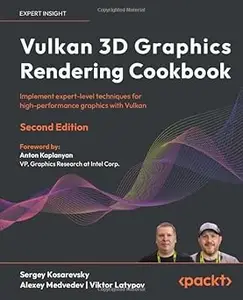
Vulkan 3D Graphics Rendering Cookbook Implement expert-level techniques for high-p...

55d08c9532b7192de42a5ef2c548f516.webp

Sergey Kosarevsky, "Vulkan 3D Graphics Rendering Cookbook: Implement expert-level techniques for high-performance graphics with Vulkan Ed 2"
English | ISBN: 1803248114 | 2025 | 714 pages | PDF | 28 MB
Master Vulkan 1.3 with practical recipes for building, rendering, and optimizing stunning 3D graphics, guided by AR and rendering experts Sergey Kosarevsky and Alexey Medvedev

Purchase the eBook for full-color content
"If you were looking for a comprehensive handbook on Vulkan and modern real-time rendering, you are holding it!" - Anton Kaplanyan, VP of Graphics Research at Intel Corp.
Key Features
Learn to harness Vulkan 1.3 for building high-performance applications
Integrate cutting-edge rendering techniques into a real-time 3D engine
Read more


Код:
[b]AusFile[/b]
https://ausfile.com/c6y9loa70p7w/4vt4m.7z.html
Rapidgator
https://rg.to/file/af43993015b27dbed980f909c951e254/4vt4m.7z.html
TakeFile
https://takefile.link/r36hbqj94yr4/4vt4m.7z.html
[b]Fileaxa[/b]
https://fileaxa.com/s87chlqyg1gi/4vt4m.7z
Fikper
https://fikper.com/vdzE8k0rfa/4vt4m.7z.html
Links are Interchangeable - Single Extraction
 
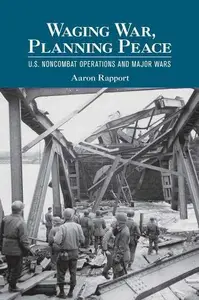
Waging War, Planning Peace U.S. Noncombat Operations and Major Wars

8b9f515117954a46a67163819abc454e.webp

Waging War, Planning Peace: U.S. Noncombat Operations and Major Wars By Aaron Rapport
2015 | 280 Pages | ISBN: 0801455642 | PDF | 1 MB
As the U.S. experience in Iraq following the 2003 invasion made abundantly clear, failure to properly plan for risks associated with postconflict stabilization and reconstruction can have a devastating impact on the overall success of a military mission. In Waging War, Planning Peace, Aaron Rapport investigates how U.S. presidents and their senior advisers have managed vital noncombat activities while the nation is in the midst of fighting or preparing to fight major wars. He argues that research from psychology-specifically, construal level theory-can help explain how individuals reason about the costs of postconflict noncombat operations that they perceive as lying in the distant future.In addition to preparations for "Phase IV" in the lead-up to the Iraq War, Rapport looks at the occupation of Germany after World War II, the planned occupation of North Korea in 1950, and noncombat operations in Vietnam in 1964 and 1965. Applying his insights to these cases, he finds that civilian and military planners tend to think about near-term tasks in concrete terms, seriously assessing the feasibility of the means they plan to employ to secure valued ends. For tasks they perceive as further removed in time, they tend to focus more on the desirability of the overarching goals they are pursuing rather than the potential costs, risks, and challenges associated with the means necessary to achieve these goals. Construal level theory, Rapport contends, provides a coherent explanation of how a strategic disconnect can occur. It can also show postwar planners how to avoid such perilous missteps.


Код:
[b]AusFile[/b]
https://ausfile.com/l05gyb2rghmn/qooij.7z.html
Rapidgator
https://rg.to/file/7fbd0aadfe23ef162a3e044a866285ab/qooij.7z.html
TakeFile
https://takefile.link/1ryw8ttllcfo/qooij.7z.html
[b]Fileaxa[/b]
https://fileaxa.com/xd76iwe0sr2d/qooij.7z
Fikper
https://fikper.com/nbH4GY7Dc1/qooij.7z.html
Links are Interchangeable - Single Extraction
 
Warlords Strong-arm Brokers in Weak States

110552c9d63bcbbfd2e1491aaae47e5b.webp

Warlords: Strong-arm Brokers in Weak States By Kimberly Marten
2012 | 280 Pages | ISBN: 0801464110 | PDF | 1 MB
Warlords are individuals who control small territories within weak states, using a combination of force and patronage. In this book, Kimberly Marten shows why and how warlords undermine state sovereignty. Unlike the feudal lords of a previous era, warlords today are not state-builders. Instead they collude with cost-conscious, corrupt, or frightened state officials to flout and undermine state capacity. They thrive on illegality, relying on private militias for support, and often provoke violent resentment from those who are cut out of their networks. Some act as middlemen for competing states, helping to hollow out their own states from within. Countries ranging from the United States to Russia have repeatedly chosen to ally with warlords, but Marten argues that to do so is a dangerous proposition.Drawing on interviews, documents, local press reports, and in-depth historical analysis, Marten examines warlordism in the Pakistani tribal areas during the twentieth century, in post-Soviet Georgia and the Russian republic of Chechnya, and among Sunni militias in the U.S.-supported Anbar Awakening and Sons of Iraq programs. In each case state leaders (some domestic and others foreign) created, tolerated, actively supported, undermined, or overthrew warlords and their militias. Marten draws lessons from these experiences to generate new arguments about the relationship between states, sovereignty, "local power brokers," and stability and security in the modern world.


Код:
[b]AusFile[/b]
https://ausfile.com/nbf5e64ktyav/qtdns.7z.html
Rapidgator
https://rg.to/file/dc9e43305be6051ae91a3c989dcd91f9/qtdns.7z.html
TakeFile
https://takefile.link/0tkmqurpluj6/qtdns.7z.html
[b]Fileaxa[/b]
https://fileaxa.com/383d5gzynz59/qtdns.7z
Fikper
https://fikper.com/PQT8ogKlaN/qtdns.7z.html
Links are Interchangeable - Single Extraction
 
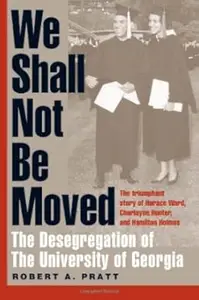
We Shall Not Be Moved The Desegregation of the University of Georgia

0d665422b9683afe82eb8934a4cf63af.webp

Robert A. Pratt, "We Shall Not Be Moved: The Desegregation of the University of Georgia"
English | 2002 | pages: 222 | ISBN: 0820327808, 0820323993 | PDF | 0,7 mb
In September 1950, Horace Ward, an African American student from La Grange, Georgia, applied to law school at the University of Georgia. Despite his impressive academic record, Ward received a reply―in reality, a bribe―from one of the university's top officials offering him financial assistance if he would attend an out-of-state law school. Ward, outraged at the unfairness of the proposition and determined to end this unequal treatment, sued the state of Georgia with the help of the NAACP, becoming the first black student to challenge segregation at the University of Georgia.

Beginning with Ward's unsuccessful application to the university and equally unsuccessful suit, Robert A. Pratt offers a rigorously researched account of the tumultuous events surrounding the desegregation of Georgia's flagship institution. Relying on archival materials and oral histories, Pratt debunks the myths encircling the landmark 1961 decision to accept black students into the university: namely the notion that the University of Georgia desegregated with very little violent opposition. Pratt shows that when Ward, by then a lawyer, helped litigate for the acceptance of Hamilton Earl Holmes and Charlayne Alberta Hunter, University of Georgia students, rather than outsiders, carefully planned riots to encourage the expulsion of Holmes and Hunter. Pratt also demonstrates how local political leaders throughout the state sympathized with―even aided and abetted―the student protestors.
Pratt's provocative story of one civil rights struggle does not stop with the initial legal decision that ended segregation at the university. He also examines the legacy of Horace Ward and other civil rights pioneers involved in the university's desegregation―including Donald Hollowell and Constance Baker Motley―who continued for a lifetime to break color barriers in the South and beyond. We Shall Not Be Moved is a testament to Horace Ward, Hamilton Holmes, Charlayne Hunter-Gault, and others who bravely challenged years of legalized segregation.


Код:
[b]AusFile[/b]
https://ausfile.com/whlygh5l6asi/wza4e.7z.html
Rapidgator
https://rg.to/file/ba8e1d78d45f6a5ff4d0493bd1526cbd/wza4e.7z.html
TakeFile
https://takefile.link/e0fn2s29pcrk/wza4e.7z.html
[b]Fileaxa[/b]
https://fileaxa.com/8ngm01bed4ab/wza4e.7z
Fikper
https://fikper.com/66vmTRy5gN/wza4e.7z.html
Links are Interchangeable - Single Extraction
 
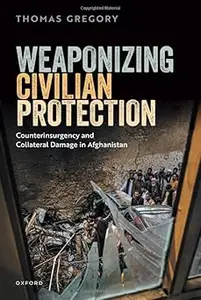
Weaponizing Civilian Protection Counterinsurgency and Collateral Damage in Afghani...

4c88b52a55b8715e078ab882f41f647a.webp

Thomas Gregory, "Weaponizing Civilian Protection: Counterinsurgency and Collateral Damage in Afghanistan"
English | ISBN: 0198897383 | 2025 | 368 pages | PDF | 33 MB
Weaponizing Civilian Protection exposes how coalition efforts to minimize and mitigate civilian casualties during the recent conflict in Afghanistan also worked to rationalize the harm inflicted upon Afghan civilians. Drawing on declassified documents and interviews with coalition officials, it traces how civilian protection was reimagined as a martial tactic rather than a humanitarian imperative, with coalition officials reframing civilian casualties as strategic setbacks that could imperil the entire mission.

This book examines the restrictions that coalition officials imposed on combat operations to minimize unnecessary harm to civilians, whilst showing how these restrictions served to constitute civilian casualties as necessary in certain situations, rendering their lives losable and their deaths ungrievable. At the same time, it examines the post-incident mitigation measures coalition officials used to prevent civilian casualties becoming strategic setbacks, including the condolence payments that were offered when civilians were harmed. Rather than seeking to make amends for the harm inflicted upon them, it claims that these post-incident mitigation measures are best characterized as a necropolitical device concerned with managing mortality more effectively. Crucially,
Read more


Код:
[b]AusFile[/b]
https://ausfile.com/kki2lt6nny5w/yo1yi.7z.html
Rapidgator
https://rg.to/file/751a34ce8f854848da53ac4e3fa528cf/yo1yi.7z.html
TakeFile
https://takefile.link/9dmnxtrhytl2/yo1yi.7z.html
[b]Fileaxa[/b]
https://fileaxa.com/gwr1ehtj8e7l/yo1yi.7z
Fikper
https://fikper.com/RM40J69NzH/yo1yi.7z.html
Links are Interchangeable - Single Extraction
 
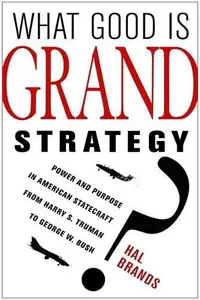
What Good Is Grand Strategy Power and Purpose in American Statecraft from Harry S....

ce0fb521048a37c1c90eb7ae35714f6b.webp

What Good Is Grand Strategy?: Power and Purpose in American Statecraft from Harry S. Truman to George W. Bush By Hal Brands
2014 | 288 Pages | ISBN: 0801470285 | PDF | 1 MB
Grand strategy is one of the most widely used and abused concepts in the foreign policy lexicon. In this important book, Hal Brands explains why grand strategy is a concept that is so alluring-and so elusive-to those who make American statecraft. He explores what grand strategy is, why it is so essential, and why it is so hard to get right amid the turbulence of global affairs and the chaos of domestic politics. At a time when "grand strategy" is very much in vogue, Brands critically appraises just how feasible that endeavor really is.Brands takes a historical approach to this subject, examining how four presidential administrations, from that of Harry S. Truman to that of George W. Bush, sought to "do" grand strategy at key inflection points in the history of modern U.S. foreign policy. As examples ranging from the early Cold War to the Reagan years to the War on Terror demonstrate, grand strategy can be an immensely rewarding undertaking-but also one that is full of potential pitfalls on the long road between conception and implementation. Brands concludes by offering valuable suggestions for how American leaders might approach the challenges of grand strategy in the years to come.


Код:
[b]AusFile[/b]
https://ausfile.com/lmez8cbqk8vp/ca0fz.7z.html
Rapidgator
https://rg.to/file/74bdf7c422a705c8bbd48f1a075bd900/ca0fz.7z.html
TakeFile
https://takefile.link/fj6ubcnfixko/ca0fz.7z.html
[b]Fileaxa[/b]
https://fileaxa.com/asko642gq1js/ca0fz.7z
Fikper
https://fikper.com/y0sB9jkqgc/ca0fz.7z.html
Links are Interchangeable - Single Extraction
 
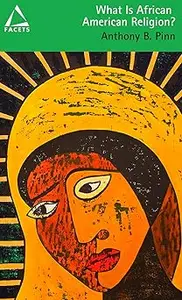
What Is African American Religion Facets series

c94a2f66aa7152f50be4cabef2e36684.webp

Anthony B. Pinn, "What Is African American Religion?: Facets series"
English | ISBN: 0800698460 | 2011 | 128 pages | EPUB | 206 KB
Is there really a monolithic "black church"? Distilling the arguments of Pinn's important and provocative work in Terror and Triumph, this brief work asks the central question: What really is African American religion?

Sketching the religious landscape of African American communities today, Pinn makes explicit the tension in traditional conversations about black religion that privilege either Christianity in particular or organizations (with doctrines and creeds) in general. Discussing the misunderstandings and historical inaccuracies of such views, Pinn offers an alternate theory of black religion that begins with a basic push for embodied meaning as its core impulse.


Код:
[b]AusFile[/b]
https://ausfile.com/3yx3fyrdr47e/eurq1.7z.html
Rapidgator
https://rg.to/file/e49dc9abd7486ba71ab7fbbb121b76b2/eurq1.7z.html
TakeFile
https://takefile.link/v2faptvvxhxe/eurq1.7z.html
[b]Fileaxa[/b]
https://fileaxa.com/bzolp2981s53/eurq1.7z
Fikper
https://fikper.com/uB5NqhGdfV/eurq1.7z.html
Links are Interchangeable - Single Extraction
 
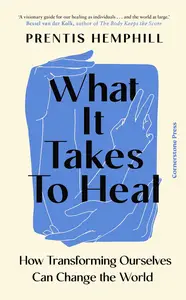
What It Takes to Heal How Transforming Ourselves Can Change the World

92350b9cef9de7c7208f9e859cc7126f.webp

What It Takes to Heal: How Transforming Ourselves Can Change the World by Prentis Hemphill
English | June 4, 2025 | ISBN: 1529935636 | 256 pages | PDF | 1.90 Mb
NATIONAL BESTSELLER

* From one of the most prominent voices in the trauma conversation comes a groundbreaking new way to heal on a personal and a collective level.
"I love this book."-Bessel van der Kolk, author of The Body Keeps the Score
"In a time when so many of us are being trained in cynicism, this book stands in necessary defiance."-Cole Arthur Riley, author of Black Liturgies and This Here Flesh
As we emerge from the past few years of collective upheaval, are we ready to face the complexities of our time with joy, authenticity, and connection? Now more than ever, we must learn to heal ourselves, connect with one another, and embody our values. In this revolutionary book, Prentis Hemphill shows us how.
What It Takes to Heal asserts that the principles of embodiment-the recognition of our body's sensations and habits, and the beliefs that inform them-are critical to lasting healing and change. Hemphill, an expert embodiment practitioner, therapist, and activist who has partnered with Brené Brown, Tarana Burke, and Esther Perel, among others, shows us that we don't have to carry our emotional burdens alone. Hemphill demonstrates a future in which healing is done in community, weaving together stories from their own experience as a trauma survivor with clinical accounts and lessons learned from their time as a social movement architect. They ask, "What would it do to movements, to our society and culture, to have the principles of healing at the very center? And what does it do to have healing at the center of every structure and everything we create?"
In this life-affirming framework for the way forward, Hemphill shows us how to heal our bodies, minds, and souls-to develop the interpersonal skills necessary to break down the doors of disconnection and take the necessary risks to reshape our world toward justice.


Код:
[b]AusFile[/b]
https://ausfile.com/2hk7vq5phyp2/tsnii.7z.html
Rapidgator
https://rg.to/file/b9b69064c28db4d8b2c660bc8dc12b67/tsnii.7z.html
TakeFile
https://takefile.link/adgmvc2newod/tsnii.7z.html
[b]Fileaxa[/b]
https://fileaxa.com/gnkj39oznnjb/tsnii.7z
Fikper
https://fikper.com/fcxobodL0i/tsnii.7z.html
Links are Interchangeable - Single Extraction
 
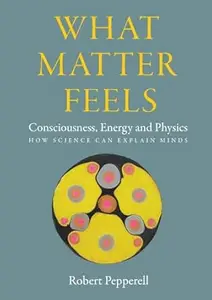
What Matter Feels Consciousness, Energy and Physics (How Science can Explain Minds)

a0b990c097bac2378ed693b479e8f108.webp

What Matter Feels: Consciousness, Energy and Physics (How Science can Explain Minds)
by Robert Pepperell
English | 2024 | ISBN: 1068523212 | 224 Pages | True ePUB | 8.6 MB

Does matter feel?
Do flowers enjoy blooming?
Do springs dislike being stretched?
Modern science denies that matter feels anything at all, let alone pleasure or pain.
But modern science is yet to explain how anything can feel-even us.
In What Matter Feels, Robert Pepperell PhD-a UK-based professor of interdisciplinary research-presents an innovative scientific framework that explores how consciousness might emerge from material systems.
By rethinking foundational principles of physics, Pepperell proposes that psychological properties of matter can be measured with the same accuracy as its physical properties like mass and energy.
The tools and methods offered in this treatise introduce a groundbreaking way of predicting and testing the psychological behaviour of both living and non-living systems, opening a new frontier in scientific inquiry.
In this book, you will discover:
An innovative scientific framework that explores how consciousness might emerge from material systems,
Tools and methods to predict and test the psychological behaviour of both living and non-living systems,
A new scientific explanation for the relation between brain activity and mental states,
Profound insights into the evolutionary forces that shape living organisms,
An exploration of how science can explain minds.
At the heart of the book is a provocative idea: experience is a fundamental property of nature, deeply tied to the flow of energy within material systems.
Building on this hypothesis, Pepperell proposes a scientific model that may not only explain the correlation between neural activity and mental states but also their causal relationship. His approach offers testable predictions about, for example, how pleasure and pain are encoded in the brain and sheds light on the evolutionary forces that shape living organisms.
What Matter Feels invites you, the reader, to engage with a living scientific document, one that encourages interdisciplinary collaboration and experimental exploration.
Explore how science can explain minds and challenge your way of thinking!


Код:
[b]AusFile[/b]
https://ausfile.com/i07ru9sgrmdr/0umlu.7z.html
Rapidgator
https://rg.to/file/74833b2d8a80c0e1805892fba7fffecf/0umlu.7z.html
TakeFile
https://takefile.link/avt52gf2uixc/0umlu.7z.html
[b]Fileaxa[/b]
https://fileaxa.com/t5j49uqz7coa/0umlu.7z
Fikper
https://fikper.com/EEq6mldTm1/0umlu.7z.html
Links are Interchangeable - Single Extraction
 
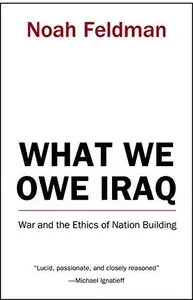
What We Owe Iraq War and the Ethics of Nation Building

052d95c6ec24fe769f51ad3221a8b9e5.webp

What We Owe Iraq: War and the Ethics of Nation Building By Noah Feldman
2009 | 176 Pages | ISBN: 1400826225 | PDF | 1 MB
What do we owe Iraq? America is up to its neck in nation building--but the public debate, focused on getting the troops home, devotes little attention to why we are building a new Iraqi nation, what success would look like, or what principles should guide us. What We Owe Iraq sets out to shift the terms of the debate, acknowledging that we are nation building to protect ourselves while demanding that we put the interests of the people being governed--whether in Iraq, Afghanistan, Kosovo, or elsewhere--ahead of our own when we exercise power over them. Noah Feldman argues that to prevent nation building from turning into a paternalistic, colonialist charade, we urgently need a new, humbler approach. Nation builders should focus on providing security, without arrogantly claiming any special expertise in how successful nation-states should be made. Drawing on his personal experiences in Iraq as a constitutional adviser, Feldman offers enduring insights into the power dynamics between the American occupiers and the Iraqis, and tackles issues such as Iraqi elections, the prospect of successful democratization, and the way home. Elections do not end the occupier's responsibility. Unless asked to leave, we must resist the temptation of a military pullout before a legitimately elected government can maintain order and govern effectively. But elections that create a legitimate democracy are also the only way a nation builder can put itself out of business and--eventually--send its troops home. Feldman's new afterword brings the Iraq story up-to-date since the book's original publication in 2004, and asks whether the United States has acted ethically in pushing the political process in Iraq while failing to control the security situation; it also revisits the question of when, and how, to withdraw.


Код:
[b]AusFile[/b]
https://ausfile.com/lmol4zd4bt0k/idnt1.7z.html
Rapidgator
https://rg.to/file/6536dbb4cafc210a79c904a201d65fcb/idnt1.7z.html
TakeFile
https://takefile.link/pbj7igl6tuif/idnt1.7z.html
[b]Fileaxa[/b]
https://fileaxa.com/o89vzdhjtnjk/idnt1.7z
Fikper
https://fikper.com/fTJJl2OmDn/idnt1.7z.html
Links are Interchangeable - Single Extraction
 
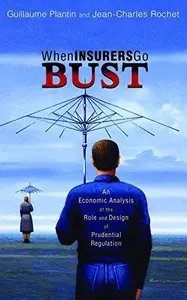
When Insurers Go Bust An Economic Analysis of the Role and Design of Prudential Re...

7a2ff97f4f64bc9d4f425a02f0c705e5.webp

When Insurers Go Bust: An Economic Analysis of the Role and Design of Prudential Regulation By Guillaume Plantin; Jean-Charles Rochet; Hyun Song Shin
2009 | 112 Pages | ISBN: 1400827779 | PDF | 1 MB
In the 1990s, large insurance companies failed in virtually every major market, prompting a fierce and ongoing debate about how to better protect policyholders. Drawing lessons from the failures of four insurance companies, When Insurers Go Bust dramatically advances this debate by arguing that the current approach to insurance regulation should be replaced with mechanisms that replicate the governance of non-financial firms. Rather than immediately addressing the minutiae of supervision, Guillaume Plantin and Jean-Charles Rochet first identify a fundamental economic rationale for supervising the solvency of insurance companies: policyholders are the "bankers" of insurance companies. But because policyholders are too dispersed to effectively monitor insurers, it might be efficient to delegate monitoring to an institution--a prudential authority. Applying recent developments in corporate finance theory and the economic theory of organizations, the authors describe in practical terms how such authorities could be created and given the incentives to behave exactly like bankers behave toward borrowers, as "tough" claimholders.


Код:
[b]AusFile[/b]
https://ausfile.com/rx3rp349q7ow/35qwq.7z.html
Rapidgator
https://rg.to/file/0fd1b0ab04b725e4d5279b9b15e825cd/35qwq.7z.html
TakeFile
https://takefile.link/s1bwkvzaia8f/35qwq.7z.html
[b]Fileaxa[/b]
https://fileaxa.com/e3bggsotgbuy/35qwq.7z
Fikper
https://fikper.com/7bSKrco2Al/35qwq.7z.html
Links are Interchangeable - Single Extraction
 
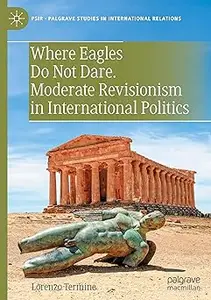
Where Eagles Do Not Dare. Moderate Revisionism in International Politics Where Eag...

cf4038ca8a8ceffb1451fe6402cbe4fb.webp

Lorenzo Termine, "Where Eagles Do Not Dare. Moderate Revisionism in International Politics: Where Eagles Do Not Dare "
English | ISBN: 3031815203 | 2025 | 233 pages | EPUB | 3 MB
When and how do great and middle powers moderately challenge the status quo? These compelling questions have largely been overlooked in International Relations literature, which typically views the cyclical rise of revolutionary revisionist great powers as an unchanging aspect of international politics. Conventional thinking suggests that after peace or major agreements are established, a new international status quo emerges, provoking major dissatisfied states to challenge it. Sometimes, these challenges escalate to full-scale wars or intense competitions with the status quo powers―those committed to defending and maintaining current conditions. Yet, revisionism does not always manifest as great power war or outright competition; it can take more moderate forms. This book addresses this neglected puzzle with two key aims. The first is explicative, seeking to provide a solid and novel causal explanation of this recurring phenomenon in international politics. The second aim is typological: to construct a more nuanced and precise typology of revisionism that focuses on foreign policy means. To validate its new theoretical framework, the book examines three case studies―the United States, Italy, and China―spanning three distinct regions and historical contexts and featuring diverse political regimes: the late 19th century, the interwar period, and the Cold War.

Read more


Код:
[b]AusFile[/b]
https://ausfile.com/w8qk8kuo1hu8/or5ie.7z.html
Rapidgator
https://rg.to/file/53bc0c047ea624825f6db1e1d726dcc3/or5ie.7z.html
TakeFile
https://takefile.link/wir45iua1gkh/or5ie.7z.html
[b]Fileaxa[/b]
https://fileaxa.com/k3nrktpnks8n/or5ie.7z
Fikper
https://fikper.com/UmCWLmYHf7/or5ie.7z.html
Links are Interchangeable - Single Extraction
 
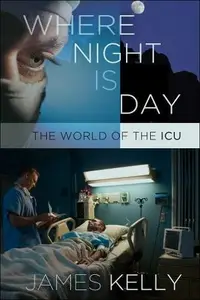
Where Night Is Day The World of the ICU

448d6eee47e878a8b03e119a9ea14369.webp

Where Night Is Day: The World of the ICU By James Kelly
2013 | 248 Pages | ISBN: 0801467659 | PDF | 1 MB
"There is no night in the ICU. There is day, lesser day, then day again. There are rhythms. Every twelve hours: shift change. Report: first all together in the big room, then at the bedside, nurse to nurse. Morning rounds. A group of doctors moves slowly through the unit like a harrow through a field. At each room, like a game, a different one rotates into the center. They leave behind a trail of new orders. Wean, extubate, titrate, start this, stop that, scan, film, scope. The steep hill the patient is asked to climb. Can you breathe on your own? Can you wake up? Can you live?"-from Where Night Is DayWhere Night Is Day is a nonfiction narrative grounded in the day-by-day, hour-by-hour rhythms of an ICU in a teaching hospital in the heart of New Mexico. It takes place over a thirteen-week period, the time of the average rotation of residents through the ICU. It begins in September and ends at Christmas. It is the story of patients and families, suddenly faced with critical illness, who find themselves in the ICU. It describes how they navigate through it and find their way. James Kelly is a sensitive witness to the quiet courage and resourcefulness of ordinary people.Kelly leads the reader into a parallel world: the world of illness. This world, invisible but not hidden, not articulated by but known by the ill, does not readily offer itself to our understanding. In this context, Kelly reflects on the nature of medicine and nursing, on how doctors and nurses see themselves and how they see each other. Drawing on the words of medical historians, doctor-writers, and nursing scholars, Kelly examines the relationship of professional and lay observers to the meaning of illness, empathy, caring, and the silence of suffering. Kelly offers up an intimate portrait of the ICU and its inhabitants.


Код:
[b]AusFile[/b]
https://ausfile.com/f0ounn3k4vsc/yely1.7z.html
Rapidgator
https://rg.to/file/4205cb14976605920290d2662932b59f/yely1.7z.html
TakeFile
https://takefile.link/oxf916vo5g6p/yely1.7z.html
[b]Fileaxa[/b]
https://fileaxa.com/r3gyjtjxq156/yely1.7z
Fikper
https://fikper.com/6mEQYYuAHQ/yely1.7z.html
Links are Interchangeable - Single Extraction
 
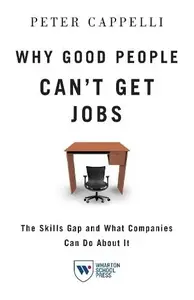
Why Good People Can't Get Jobs The Skills Gap and What Companies Can Do About It

fa51b845f0735aeb266419e828563f2d.webp

Why Good People Can't Get Jobs: The Skills Gap and What Companies Can Do About It By Peter Cappelli
2012 | 108 Pages | ISBN: 1613630131 | PDF | 1 MB
Peter Cappelli, Wharton management professor and director of Wharton's Center for Human Resources, debunks the arguments and exposes the real reasons good people can't get hired. Named one of HR Magazine's Top 20 Most Influential Thinkers of 2011, Cappelli points the way forward to rev America's job engine again.Peter Cappelli confronts the myth of the skills gap and provides an actionable path forward to put people back to work.Even in a time of perilously high unemployment, companies contend that they cannot find the employees they need. Pointing to a skills gap, employers argue applicants are simply not qualified; schools aren't preparing students for jobs; the government isn't letting in enough high-skill immigrants; and even when the match is right, prospective employees won't accept jobs at the wages offered.In this powerful and fast-reading book, Peter Cappelli, Wharton management professor and director of Wharton's Center for Human Resources, debunks the arguments and exposes the real reasons good people can't get hired. Drawing on jobs data, anecdotes from all sides of the employer-employee divide, and interviews with jobs professionals, he explores the paradoxical forces bearing down on the American workplace and lays out solutions that can help us break through what has become a crippling employer-employee stand-off.Among the questions he confronts: Is there really a skills gap? To what extent is the hiring process being held hostage by automated software that can crunch thousands of applications an hour? What kind of training could best bridge the gap between employer expectations and applicant realities, and who should foot the bill for it? Are schools really at fault?Named one of HR Magazine's Top 20 Most Influential Thinkers of 2011, Cappelli not only changes the way we think about hiring but points the way forward to rev America's job engine again.


Код:
[b]AusFile[/b]
https://ausfile.com/hjaeb5826las/re8vq.7z.html
Rapidgator
https://rg.to/file/6636daf4edcf693b12cb64a6064e61a8/re8vq.7z.html
TakeFile
https://takefile.link/ug91gwy4lgvh/re8vq.7z.html
[b]Fileaxa[/b]
https://fileaxa.com/aufb7i88w3xi/re8vq.7z
Fikper
https://fikper.com/ubQd2YPU5M/re8vq.7z.html
Links are Interchangeable - Single Extraction
 
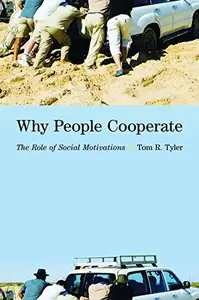
Why People Cooperate The Role of Social Motivations

f40bf52d22e80394711332635b4af1b8.webp

Why People Cooperate: The Role of Social Motivations By Tom R. Tyler
2010 | 232 Pages | ISBN: 1400836662 | PDF | 1 MB
Any organization's success depends upon the voluntary cooperation of its members. But what motivates people to cooperate? In Why People Cooperate, Tom Tyler challenges the decades-old notion that individuals within groups are primarily motivated by their self-interest. Instead, he demonstrates that human behaviors are influenced by shared attitudes, values, and identities that reflect social connections rather than material interests. Tyler examines employee cooperation in work organizations, resident cooperation with legal authorities responsible for social order in neighborhoods, and citizen cooperation with governmental authorities in political communities. He demonstrates that the main factors for achieving cooperation are socially driven, rather than instrumentally based on incentives or sanctions. Because of this, social motivations are critical when authorities attempt to secure voluntary cooperation from group members. Tyler also explains that two related aspects of group practices--the use of fair procedures when exercising authority and the belief by group members that authorities are benevolent and sincere--are crucial to the development of the attitudes, values, and identities that underlie cooperation. With widespread implications for the management of organizations, community regulation, and governance, Why People Cooperate illustrates the vital role that voluntary cooperation plays in the long-standing viability of groups.


Код:
[b]AusFile[/b]
https://ausfile.com/6cs772uql26r/tqocq.7z.html
Rapidgator
https://rg.to/file/f31eedc7eae2e02bb44a3914bde74f50/tqocq.7z.html
TakeFile
https://takefile.link/0ub4u9i694gn/tqocq.7z.html
[b]Fileaxa[/b]
https://fileaxa.com/zm4r7a5u7lbi/tqocq.7z
Fikper
https://fikper.com/CSXqsA1K6T/tqocq.7z.html
Links are Interchangeable - Single Extraction
 
Wildcat Dome A Novel

0c34f675e259a75bb6e35ec3fd16a726.webp

Wildcat Dome: A Novel by Yuko Tsushima, translated by Lisa Hofmann-Kuroda
English | March 18, 2025 | ISBN: 0374610746, 9780374610753 | True EPUB | 272 pages | 0.8 MB
An epic novel of postwar Japan―a powerful reckoning with empire, catastrophe, trauma, and truth-telling―by the author of Territory of Light.

Mitch and Yonko haven't spoken in a year. As children, they were inseparable, raised together in an orphanage outside Tokyo―but ever since the sudden death of Mitch's brother, they've been mourning in their private ways, worlds apart. In the aftermath of the Fukushima nuclear catastrophe, they choose to reunite, finding each other in a city undone by disaster.
Mitch and Yonko have drifted apart, but they will always be bound together. Because long ago they witnessed an unspeakable tragedy, a tragedy that they've kept secret for their entire lives. They never speak of it, but it's all around them. Like history, it repeats itself.
Yuko Tsushima's sweeping and consuming novel is a metaphysical saga of postwar Japan. Wildcat Dome is a hugely ambitious exploration of denial, of the ways in which countries and their citizens avoid telling the truth―a tale of guilt, loss, and inevitable reckoning.


Код:
[b]AusFile[/b]
https://ausfile.com/ikwe1ts189bt/tfth3.7z.html
Rapidgator
https://rg.to/file/39cb97536de4536f0baa5a23ea705fb3/tfth3.7z.html
TakeFile
https://takefile.link/gyrs7ws1nv28/tfth3.7z.html
[b]Fileaxa[/b]
https://fileaxa.com/9o438svfnyh7/tfth3.7z
Fikper
https://fikper.com/4nk0M3IWEy/tfth3.7z.html
Links are Interchangeable - Single Extraction
 
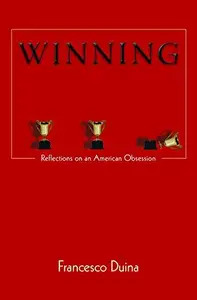
Winning Reflections on an American Obsession

ad0ca2dc0e9e893926569672b0c8d9a4.webp

Winning: Reflections on an American Obsession By Francesco Duina
2010 | 256 Pages | ISBN: 1400836689 | PDF | 1 MB
Most of us are taught from a young age to be winners and avoid being losers. But what does it mean to win or lose? And why do we care so much? Does winning make us happy? Winning undertakes an unprecedented investigation of winning and losing in American society, what we are really after as we struggle to win, our collective beliefs about winners and losers, and much more. Francesco Duina argues that victory and loss are not endpoints or final destinations but gateways to something of immense importance to us: the affirmation of our place in the world. But Duina also shows that competition is unlikely to provide us with the answers we need. Winning and losing are artificial and logically flawed concepts that put us at odds with the world around us and, ultimately, ourselves. Duina explores the social and psychological effects of the language of competition in American culture. Primarily concerned with our shared obsessions about winning and losing, Winning proposes a new mind-set for how we can pursue our dreams, and, in a more satisfying way, find our proper place in the world.


Код:
[b]AusFile[/b]
https://ausfile.com/1rttfq1a77vy/jc04v.7z.html
Rapidgator
https://rg.to/file/d407945e8986be002ac0f7c408af568c/jc04v.7z.html
TakeFile
https://takefile.link/p1wjmi1a8giz/jc04v.7z.html
[b]Fileaxa[/b]
https://fileaxa.com/5ukt98o8pixn/jc04v.7z
Fikper
https://fikper.com/rSCn4yvhOB/jc04v.7z.html
Links are Interchangeable - Single Extraction
 
Назад
Сверху